
~ by Conny Timbane, Rangeland Coordinator and Trainer
The Nature Positive Livelihoods Demonstration Project in the Kruger to Canyons Biosphere Region (K2C BR) is making steady progress in supporting rural communities to adapt to climate change while improving their livelihoods. At the heart of this progress is the establishment of conservation agreements with local livestock farmers—formal commitments that are driving the adoption of sustainable rangeland management practices.
Working closely with farmers through the Herding for Health (H4H) methodology, these conservation agreements provide a structured approach to promoting responsible grazing, land restoration, and improved livestock management. They serve not only as a tool for accountability, but also as a foundation for building trust, shared ownership, and long-term sustainability.
Understanding Conservation Agreements
A conservation agreement is a negotiated partnership between a conservation organisation and local communities who depend on natural resources to support their livelihoods. These agreements are designed to ensure that conservation efforts and community benefits go hand in hand.
They are built around four key components:
1. Conservation Actions:
Farmers and resource users commit to practices that promote sustainable use of natural resources and reduce threats to biodiversity, such as improved grazing management and land restoration.
2. Benefit Package:
In return, conservation organisations provide incentives or support to encourage participation and compensate farmers for their conservation efforts.
3. Compliance Monitoring:
A monitoring framework is used to track progress and ensure that both parties meet their commitments.
4. Penalties for Non-Compliance:
Fair and agreed-upon penalties are applied if either party does not meet their responsibilities.
These agreements are guided by important principles: participation is voluntary, processes must be transparent and inclusive, both parties are equal partners, outcomes should be mutually beneficial, and communities must receive tangible benefits for conserving natural resources.
The journey began in Phiring Village, where the first conservation agreements were introduced as part of a demonstration approach. Through strong community engagement, training, and practical support, farmers committed to improved grazing practices that restore degraded land, enhance soil health, and increase livestock productivity. The success of these agreements in Phiring in 2025 created a strong foundation for scaling the model.
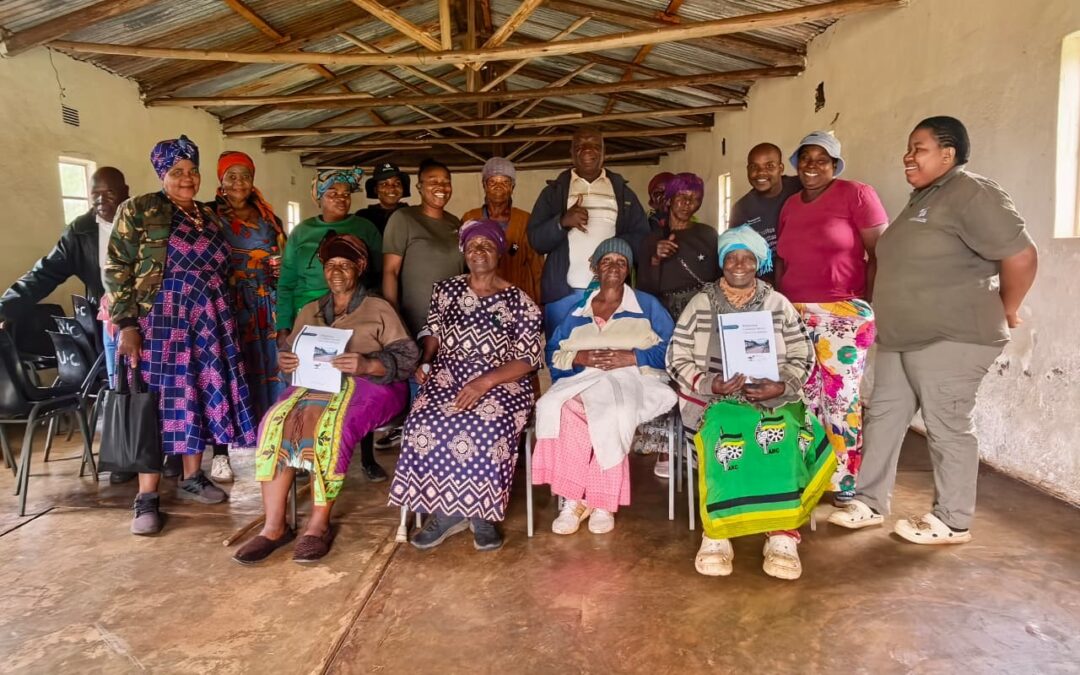
Recently, efforts have focused on re-negotiating and strengthening conservation agreements with livestock farmers at the Phiring demonstration site. A Conservation Agreement has already been successfully signed with farmers in Malaeneng, while the negotiation process with farmers in Phiring is currently underway. This process is important for reinforcing commitments, improving implementation, and ensuring that agreements remain relevant to community needs and environmental challenges.
Building on this momentum, the project has expanded to Moremela and Boelang, where conservation agreements continue to play a central role. Between August and December, two key agreements were successfully signed, marking an important milestone in strengthening partnerships with farmers and expanding the project’s reach.
One of the most notable conservation agreements was signed with Mr Dilebo, focusing on the implementation of a cover crop project. Through this agreement, Mr Dilebo committed to practices that support land recovery and sustainable grazing. Cover crops play a critical role in this effort by allowing grazing areas to rest, improving soil fertility, and reducing land degradation. His site now serves as a demonstration area, enabling other farmers to learn from practical, visible results.
In Moremela, another conservation agreement was signed, bringing more farmers into the initiative. Through these agreements, farmers are supported to adopt sustainable practices such as rotational grazing, improved herd management, and land restoration techniques. These commitments ensure that the principles of sustainable rangeland management are not only introduced but consistently applied over time.
The project continues to prioritise the expansion of conservation agreements as a key strategy for scaling impact. By formalising partnerships with farmers, the initiative ensures that environmental stewardship and livelihood improvement go hand in hand. These agreements are proving to be powerful tools in restoring degraded rangelands while strengthening community resilience to climate change.
Through collaboration, education, and practical demonstration anchored in conservation agreements, the K2C BR project is showing that sustainable land management is both achievable and beneficial. As more farmers and communities commit to these agreements, the vision of healthier ecosystems and improved rural livelihoods is steadily becoming a reality.