
When inclusion strengthens conservation: Insights from Women Conserving Southern Africa
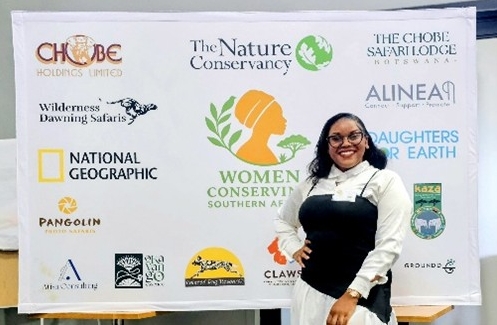
In February Rešoketšwe ‘Shoki’ Mafogo from our Nature Positive Livelihoods Demonstration Programme represented the K2C Biosphere Region at the Women Conserving Southern Africa Conference in Botswana, a gathering of over 120 women leaders, practitioners, and researchers working at the intersection of conservation and community across the region.
Her participation, including participating in a panel discussion on women in conservation, formed part of a wider regional conversation exploring how gender inclusion shapes more effective and resilient environmental work.
At the heart of the conference was a clear and consistent message – conservation does not happen in isolation. It is deeply connected to how people live, use, and relate to the landscapes around them. Across sessions, this connection was explored through themes such as community-based natural resource management, climate change adaptation, indigenous knowledge systems, and biodiversity conservation, all viewed through the lens of gender and safeguards.
For K2C, the value of this engagement lies not only in representation, but in reflection.
“Conservation succeeds when it includes everyone,” Shoki reflected following the conference. “At K2C, gender inclusion is a pathway to stronger ecosystems, empowered communities, and lasting stewardship. This reminds us that when women are meaningfully included in conservation, we strengthen not only leadership but the resilience of landscapes and communities.”
Encouragingly, feedback from peers across the region highlighted K2C’s work as being advanced in its approach to gender inclusion. This recognition speaks to years of intentional effort, embedding gender-responsive approaches across programmes, partnerships, and internal systems.
But the conference also created space to learn.
Exposure to approaches from across Southern Africa offered practical insights into how gender considerations can be more deeply integrated into conservation practice, from programme design and implementation to monitoring tools such as gender scorecards. These learnings are already being carried forward into the work of K2C’s Gender Working Group and broader Communities of Practice, helping to strengthen how inclusion is translated into everyday action across the landscape.
Importantly, the connections made extend beyond the event itself. A regional working group of country representatives has been established to carry forward collaboration over the next two years, creating an ongoing platform for shared learning and accountability.
For K2C, this moment sits within a broader trajectory.
Across the biosphere, women are central to how natural resources are managed, how households function, and how communities respond to change. Strengthening their role within conservation is not an add-on, it is fundamental to achieving lasting impact.
As we continue to grow partnerships and refine our approaches, this experience reinforces a simple but powerful truth – inclusive conservation is more effective conservation.
Thank you to Daughters for Earth and Prof Emily Bennitt for hosting this truly impactful conference!