
Citizen science strengthens water protection in the K2C Biosphere
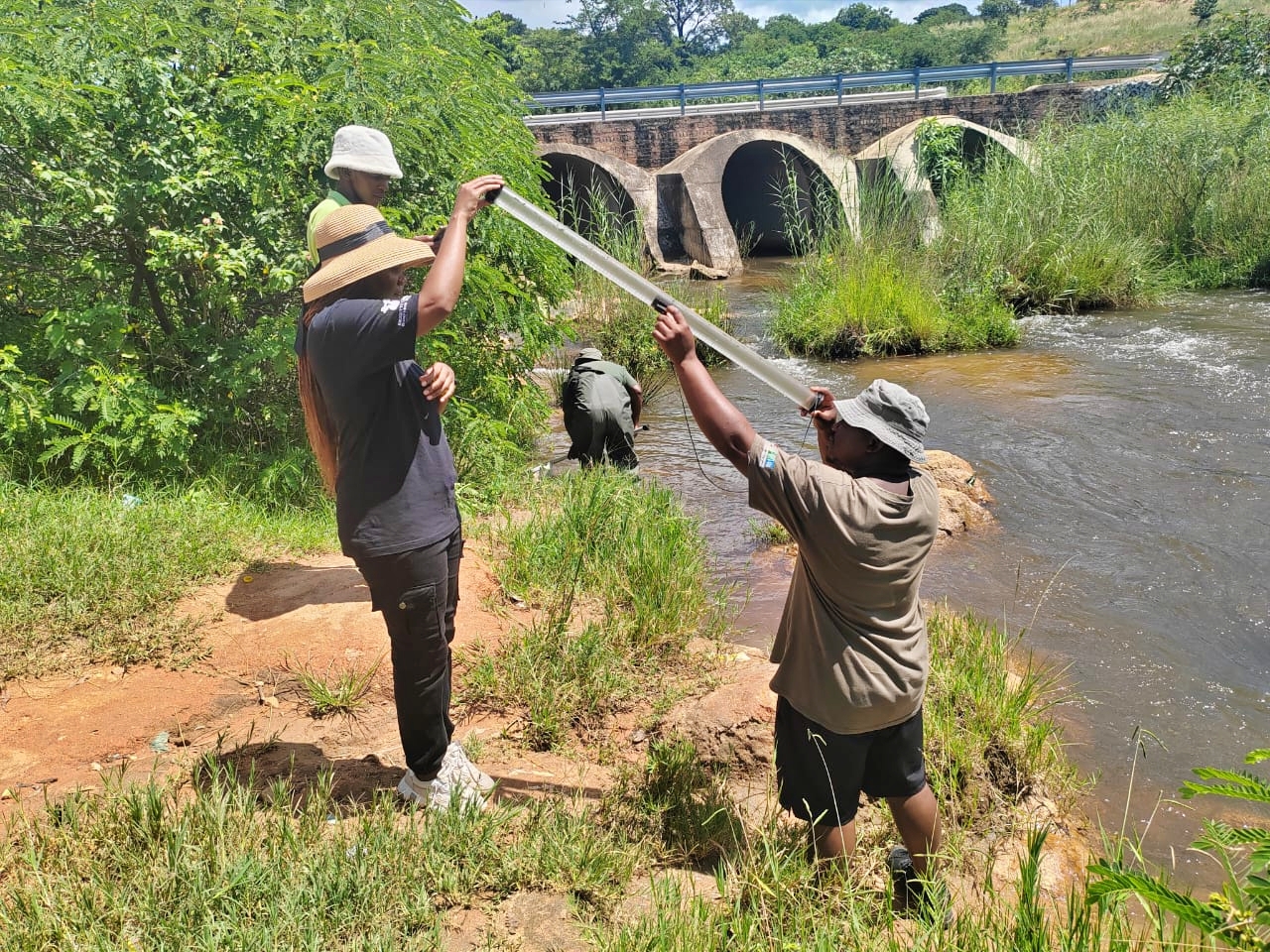
Citizen science is an important tool for understanding and protecting water resources in the Kruger to Canyons Biosphere Region.
On 2 June 2026, K2C’s Senior Project Manager, Nicholas Theron, shared a presentation with UNESCO on the role that citizen science plays in water management, particularly in areas where catchments are under pressure from illegal mining and other land-use impacts.
Healthy catchments are essential for people, livelihoods, agriculture and biodiversity. When these systems are damaged, the effects are felt far beyond the immediate site of impact. Illegal mining is one of the serious threats facing South Africa’s catchments. It disturbs riverbanks, increases sediment in rivers, reduces water clarity and damages the natural systems that help regulate water flow and quality.
The presentation highlighted how citizen science has been helping to make these impacts more visible. By using simple, practical monitoring tools, trained community members and local teams can collect regular information on river health. These tools include measurements of water clarity and mini-SASS, the South African Scoring System, which gives a rapid measure of river health.
This monitoring adds an important layer of local observation, allowing changes in river condition to be picked up more quickly and tracked over time. It also helps connect people living in the landscape with the health of the water systems they depend on.
One example shown in the presentation was water clarity monitoring in the Blyde, Moremela and Treur Rivers. The data showed a concerning decline in water clarity at one Blyde River monitoring site over time, with a raid on illegal mining taking place upstream during the monitoring period. Notably, after a response by SAPS and local community groups, the water clarity showed an immediate improvement.
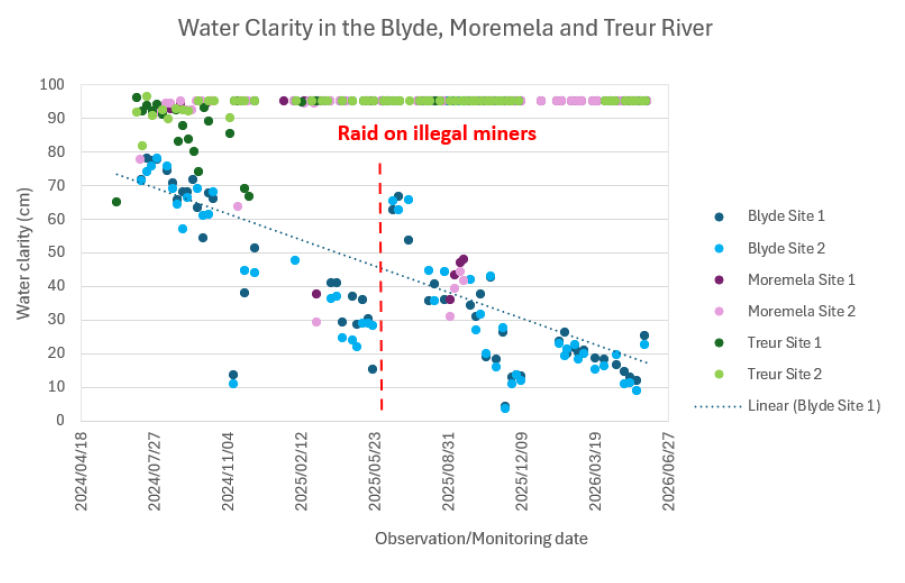
Click on image to view the presentation and full-size graph.
This reflects how citizen science data can be used to inform not only management decisions, but also policing and responses by authorities. When action is taken, the environment can and does respond rapidly. In this way, citizen science becomes more than data collection. It is a bridge between observation, evidence and response.
In a region where water security is closely linked to biodiversity, livelihoods and long-term resilience, this kind of locally grounded monitoring is not a side project. It is part of the work needed to protect the catchments that sustain life in the Kruger to Canyons Biosphere.