
Listening, responding, adapting: Vusi Tshabalala on human-wildlife coexistence in Phalaubeni
Human-wildlife coexistence is often spoken about as a broad conservation goal, but in places like Phalaubeni it is practical, immediate and very personal.
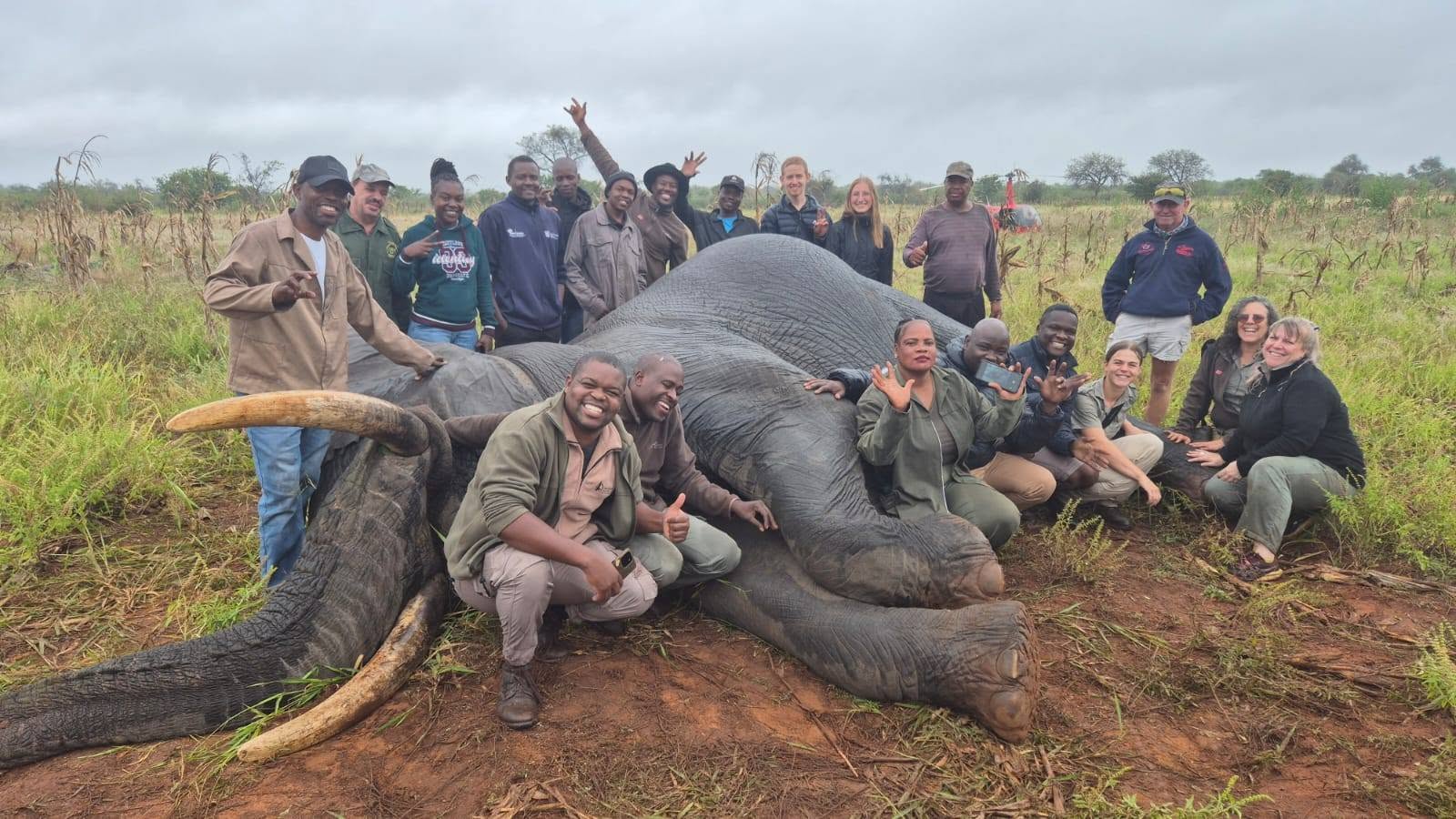
Phalaubeni is a community that lives directly alongside the Kruger National Park. In recent months, two elephant bulls were repeatedly moving out of the protected area and into nearby farmlands, feeding on crops, damaging fences and placing both people and elephants at risk. For families in the area, these crops are not just plants in the ground – they are food, income and security. Fencing is also not something that can be easily or quickly replaced in such remote areas with limited resources. When elephant movement becomes a daily concern, community tolerance is placed under real pressure.
K2C’s Human-Wildlife Conflict team has been working closely with the Phalaubeni community, Elephants Alive and other partners to support a coordinated response. This work has included listening to community concerns, strengthening reporting channels, supporting incident coordination, and helping partners to understand what is happening on the ground.
Vusi Tshabalala has been central to this work. As K2C’s Human-Wildlife Conflict specialist, Vusi helps to bridge the space between community experience, conservation partners and practical response planning. His role is not only technical, it requires trust, local relationships and the ability to work carefully in situations where both people and wildlife are vulnerable.
After earlier deterrence efforts did not resolve the situation, collaring one of the elephant bulls was identified as the most practical next step. The collar allows partners to better understand elephant movement, respond more quickly, and work towards guiding the bulls back into protected areas where possible.
This response forms part of the broader SAFE Systems approach being supported in Phalaubeni. SAFE Systems looks at human-wildlife coexistence through a wider lens, including safety, monitoring, community participation, prevention, response and long-term resilience. In Phalaubeni, this approach has helped bring partners, traditional structures, community members and conservation teams into a more coordinated way of working.
Vusi recently spoke to Hoedspruit FM about the Phalaubeni situation, the realities faced by local communities, and the importance of practical coexistence work in the Kruger to Canyons Biosphere Region.
Listen to Vusi’s engaging interview HERE.
