
From 20 to 35: Growing resilience through Eco-Savings and Credit Groups
~ by Mpho Mativandlela | Eco-Savings and Credit Groups Coordinator
Savings as a pathway to climate resilience
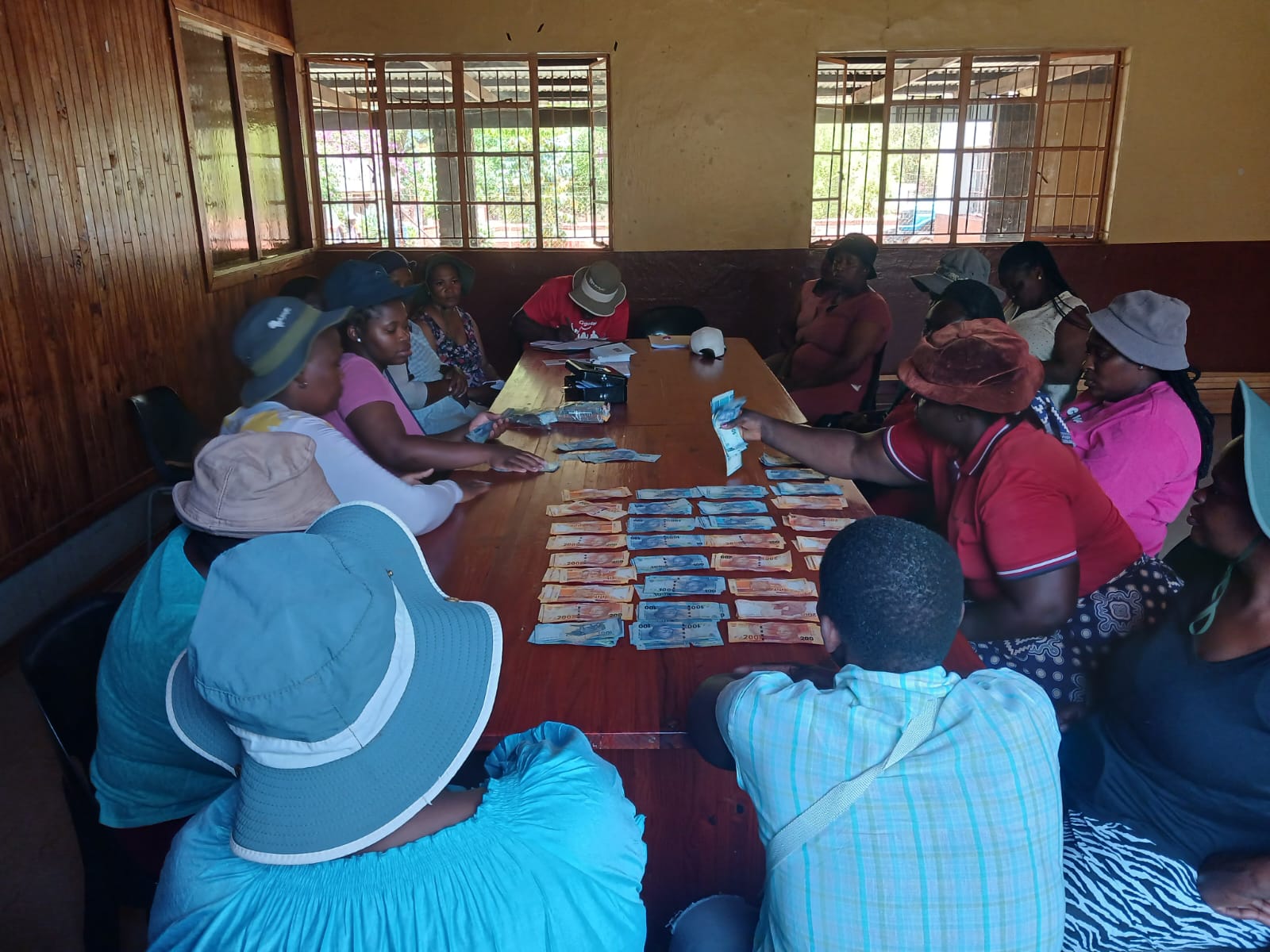
In 2021, K2C introduced Eco-Savings and Credit Groups (E-SCGs) in Phiring as a community-based financial mechanism to strengthen climate change adaptation. The approach was designed to give communities practical access to finance while linking savings and credit to sustainable catchment management and improved livelihoods. What began with four pilot groups grew to 20 groups and 331 members by mid-2025; the latest E-SCG register now reflects 35 active groups and 600 members, including 506 women. The growth demonstrates both increasing community demand and the expansion of the model across the K2C landscape.
Since the groups started in 2021, members have saved R3 823 100, accessed R6 239 609 in credit to build resilience, and generated R2 416 509 in returns. These figures reflect the discipline and commitment of members in building their own community financial systems.
The E-SCG mechanism helps communities build resilience through pooling of members resources and accessing affordable, community-managed loans. Rather than relying only on external finance, members build a financial base that can be used when opportunities or climate-related pressures arise. Within K2C, savings and credit support climate adaptation and sustainable livelihood activities, including agroecology, sustainable livestock and rangeland management, small enterprise development and reusable Absorbent Hygiene Products (AHPs). In this way, community finance becomes a practical bridge between financial inclusion, sustainable livelihoods and environmental stewardship.
Building livelihoods and working towards family goals
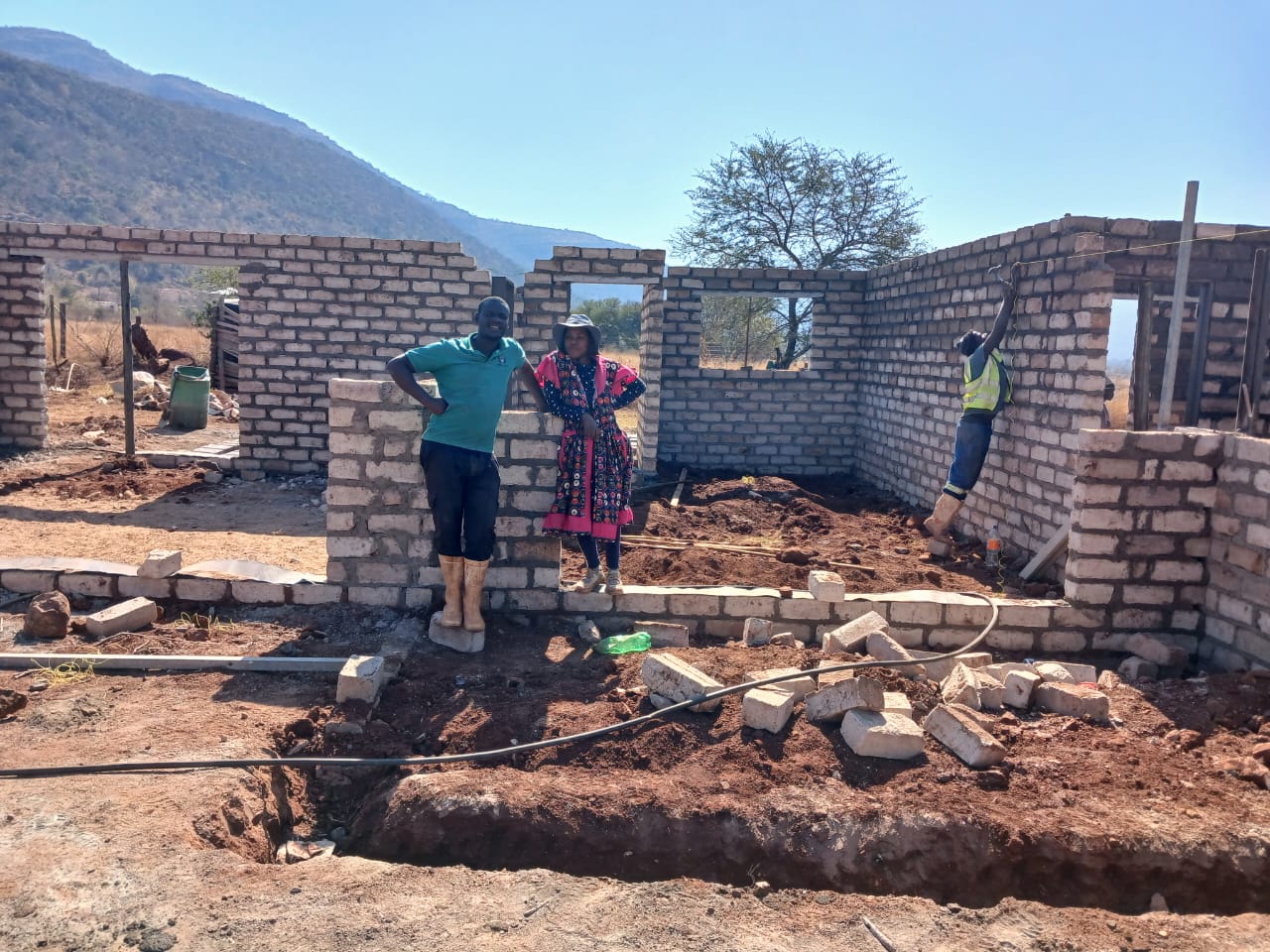
David Magabe is a member of the Mahohlo savings group, one of the first groups established in Phiring, K2C’s demonstration site. He joined as a crop farmer with a goal to save towards building a home for his family. Depending on his harvest for his livelihood, David has used capital accessed through the group to increase his crop yields and build resilience to the extreme weather patterns experienced in recent years. As he made a profit from his harvest, he was able to save more money towards his goal of building a home.
David has fully repaid his first capital expenditure (CAPEX) loan and has been approved for a second. He forms part of the Chairman’s Forum Task Team, which encourages CAPEX repayments among recipients. Through his farming and commitment to repayment, he demonstrates how access to finance can support sustainable livelihoods while helping members work towards their family goals.
Building quality groups from the start
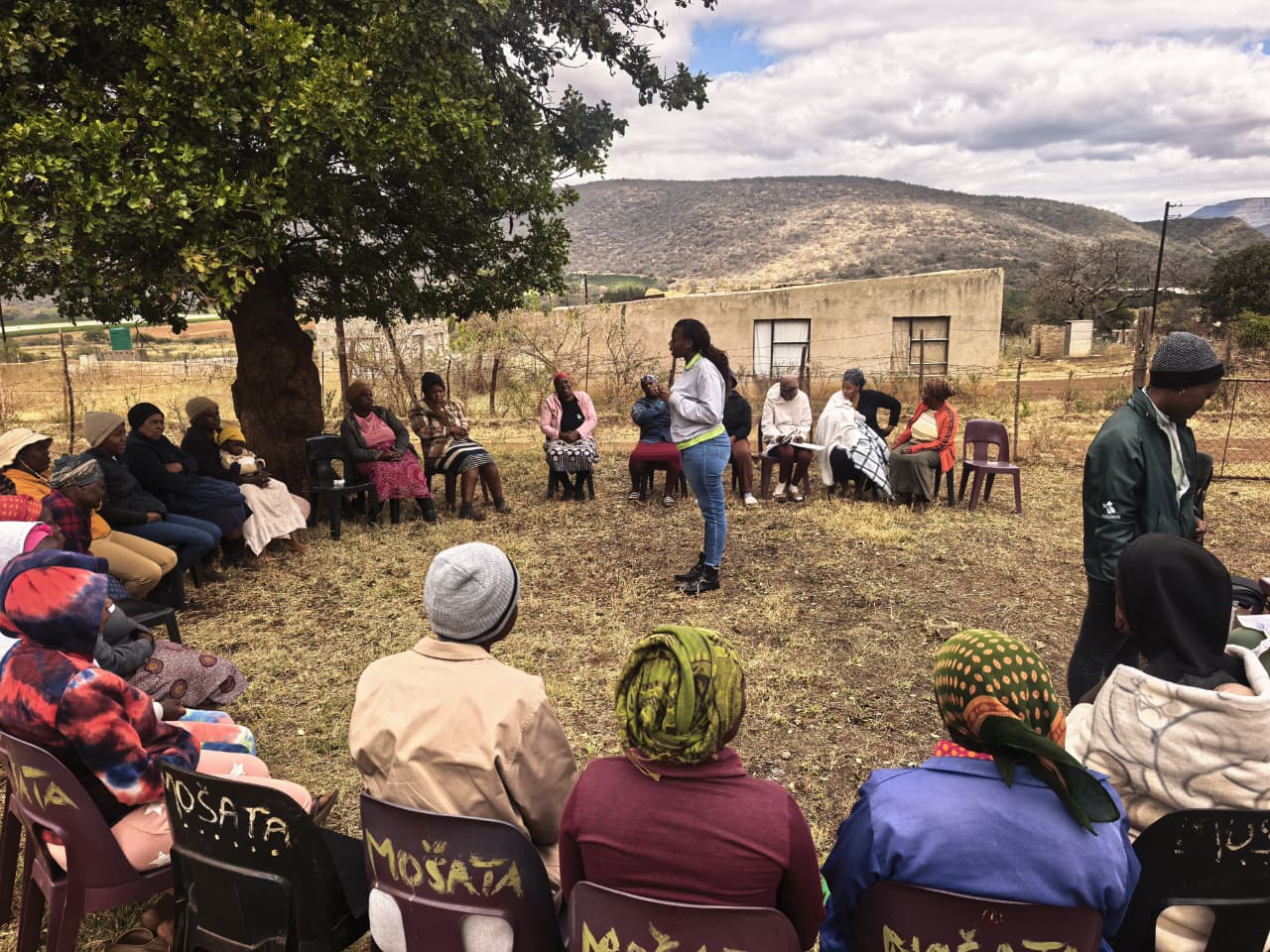
Quality implementation begins before a group is formally established. New groups go through an intensive three-day training process covering the principles of the savings model, group constitution, leadership and governance, savings and loan procedures, and meeting processes. This creates a common understanding of members’ roles and responsibilities and prepares groups to take ownership of their financial system. Training is followed by mentoring, financial education and health checks to support groups as they mature.
Governance that keeps groups learning
Quarterly Chairman’s Forums bring chairpersons and secretaries from the E-SCGs together to reflect on performance, share highlights and challenges, and learn from one another. These forums strengthen accountability, peer learning and problem-solving while creating a feedback loop between community groups and K2C. The approach helps groups identify challenges early, reinforce good governance and continuously improve their practice.
“As a coordinator and trainer, it brings me so much joy to see groups putting the model into practice, celebrating the results of their hard work during share-outs, and sharing their lessons and achievements at the quarterly Chairman’s Forums.” Says Mpho Mativandela, K2C Eco-Savings and Credit Group Coordinator. “These moments remind me of the resilience, confidence and opportunities that savings can create.”
A partnership built on practice and quality
K2C’s relationship with SaveAct and the wider WeSave Collective strengthens this work through shared learning, practical exchange and continued attention to quality implementation. Marie-Tinka Uys and Mpho Mativandlela represented K2C at the 2026 Annual Partners Meeting, held from 19–21 August in Johannesburg, where partners revisited the core methodology and emphasised upholding the core savings methodology while adapting its application to different community contexts. For K2C, partnership means more than adopting a model: it means practising it, learning from community experience, strengthening implementation and sharing lessons that contribute to a stronger savings movement.
Looking ahead
The journey from four pilot groups to 35 active groups in August 2026 shows how community finance can become a foundation for wider resilience. As E-SCGs continue to grow, K2C will focus on strengthening group governance, expanding access to climate-adaptive finance, supporting sustainable livelihood investments and deepening partnerships that enable quality, learning and long-term community ownership.