
July 2026
This quarter has been full of visible moments for the Kruger to Canyons Biosphere.
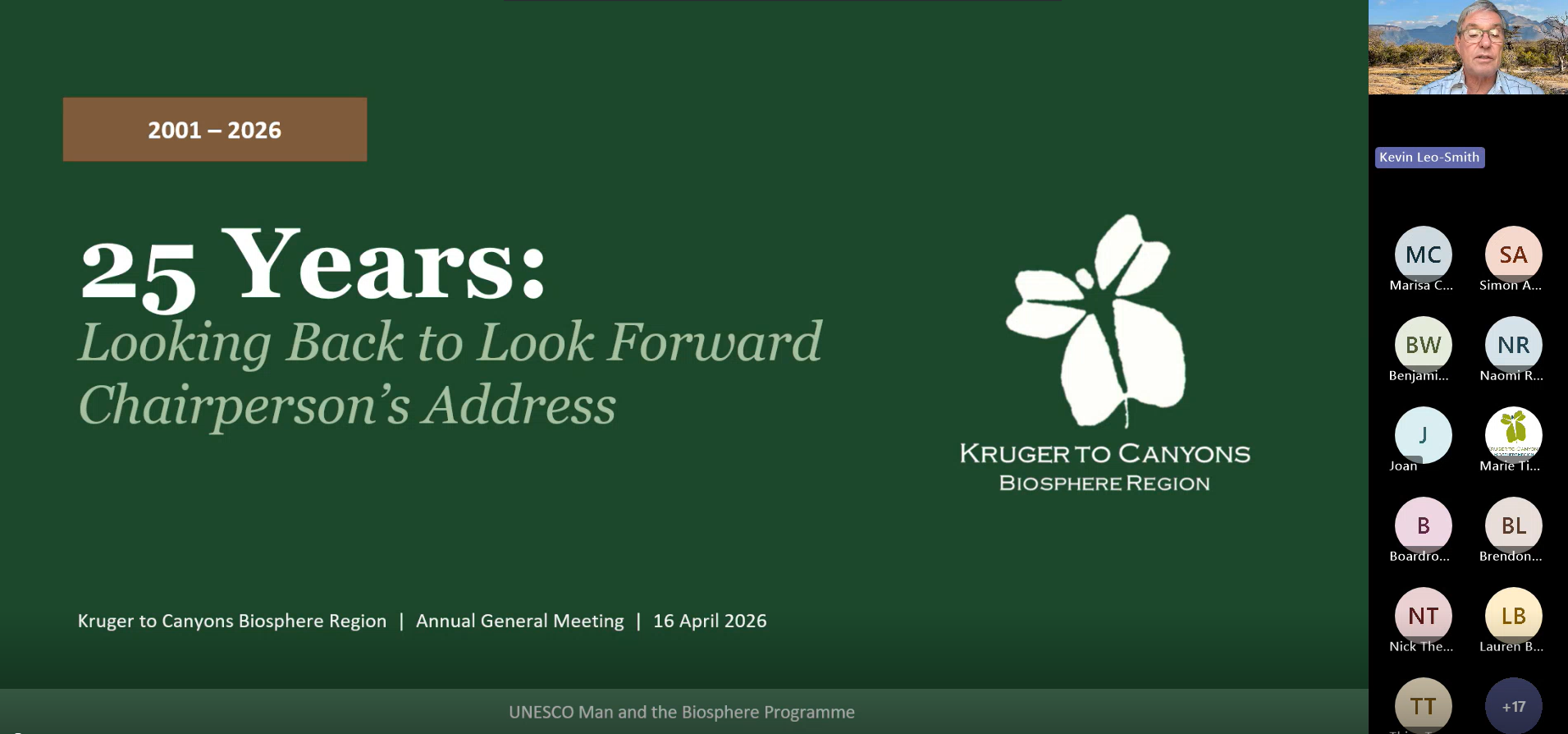
In April, we held our Annual General Meeting in a year that marks 25 years since the region was formally designated under UNESCO. The meeting reflected on K2C’s growth, the strength of our partner network, our 14th consecutive clean audit, and the expanding work taking place across catchments, communities and livelihoods. We invite you to watch the Chairman’s address and AGM recording linked in this newsletter for a fuller reflection on the year.
This edition also shares several of the milestones and stories that have shaped the past few months: the Biosphere’s flagship Kruger2Canyon Challenge, new species recognition linked to K2C team members, our team building day at Finale Trails, and ongoing work around catchment restoration, climate resilience, community livelihoods and human-wildlife coexistence.
These are the stories that are easiest to see: the events, discoveries, gatherings and milestones. But between them, the day-to-day work continues. Teams return to the same catchments, communities, farms, schools and field sites. They clear and monitor. They listen, record, repair, test ideas, support local initiatives and keep relationships alive.
This is the rhythm of biosphere work: visible moments held up by steady, practical work that happens over time, alongside the people and places that make this landscape what it is.
Thank you for being an important part of this journey!
Warm regards,
The K2C Biosphere Team

Click on the screenshot below to watch the recording of the Chariman’s address and meeting.
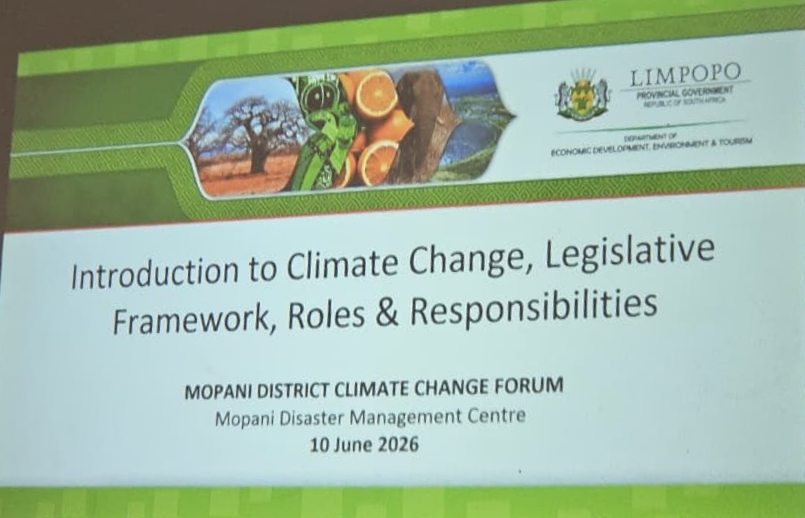
K2C joins Mopani District Climate Change Workshop
K2C attended the Mopani District Climate Change Workshop in Tzaneen to strengthen collaboration around climate resilience, biodiversity conservation and sustainable livelihoods. The workshop brought together government, civil society and business stakeholders to discuss the district’s Climate Change Response Strategy, future forum structures and opportunities for coordinated adaptation action across the Mopani District.
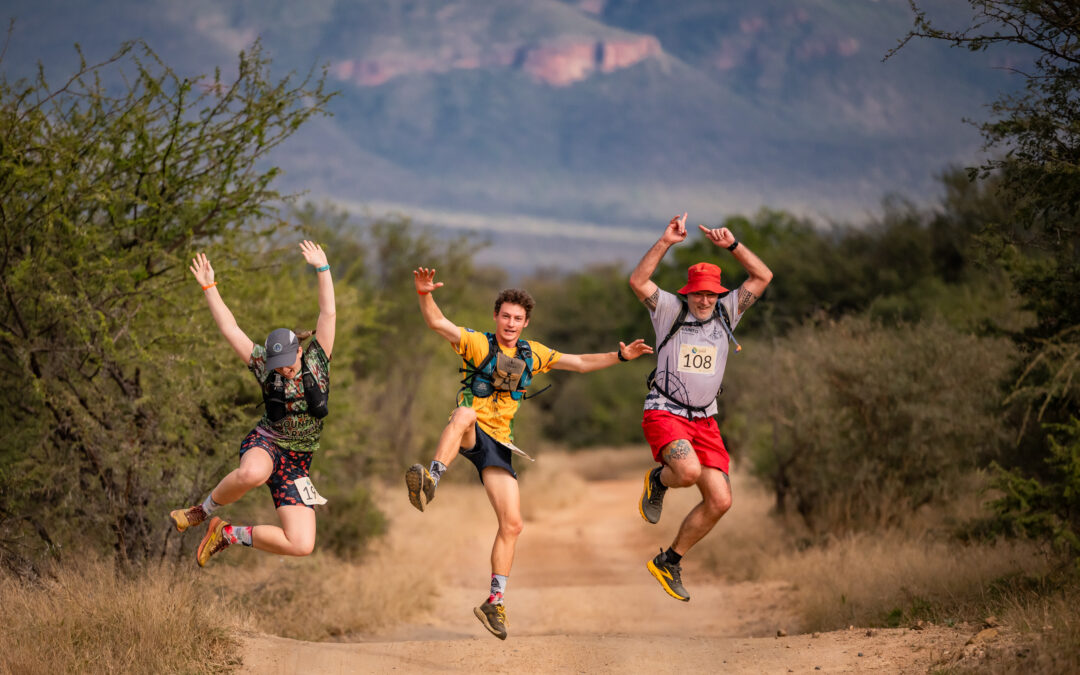
K2C Challenge 2026: runners, rangers and a race stitched into the landscape
The 2026 Kruger2Canyon Challenge brought 266 participants to Kampersrus for a weekend of mountain trails, Lowveld views and conservation connection. From a new Mariepskop summit experience and strong stage race performances, to the growing Ranger Challenge and the K2C Biosphere presence throughout the race village, the event once again showed how trail running can connect people more deeply to the landscapes they move through.

Before a species can be managed or protected, it needs a name
A recently described plant species, Thorncroftia attwoodii, has been recorded from Limpopo Province, adding to the growing body of knowledge about the unique biodiversity of the Kruger to Canyons Biosphere Region. The species was discovered through observations shared on iNaturalist and has since been formally described by botanists, highlighting the important role that citizen science can play in supporting research and conservation. With its current assessment as Rare and Data Deficient, the discovery is also a reminder that there is still much to learn about the species, habitats and ecological significance of this landscape.
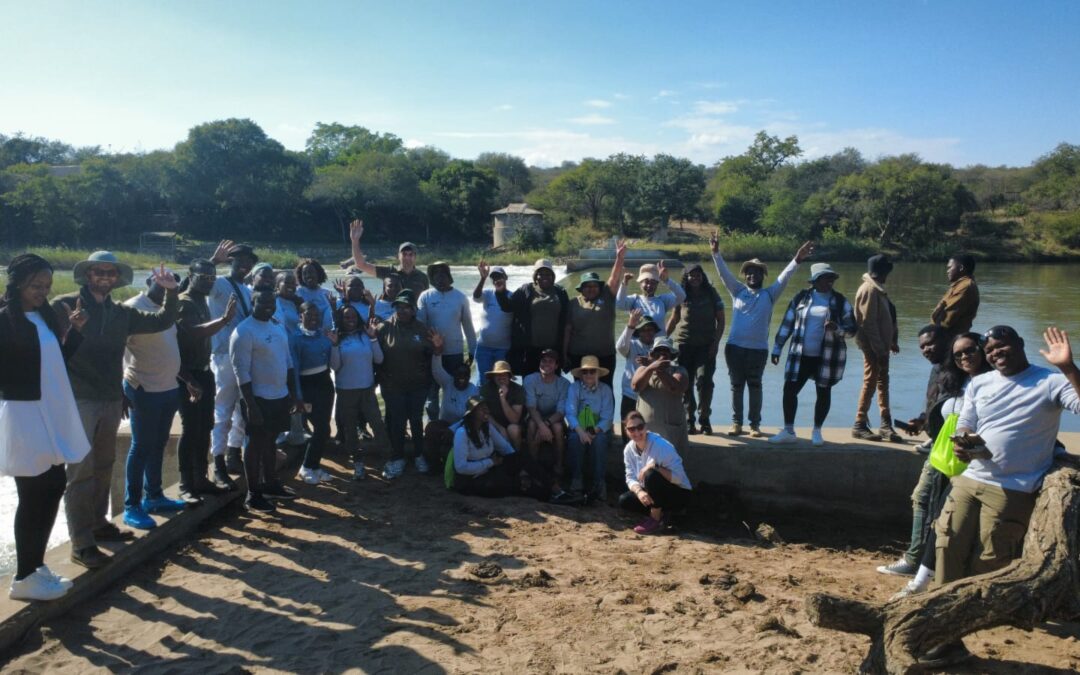
K2C team reconnects on the Finale Ecotourism Trails
The K2C team recently spent a day on the Finale ecotourism trails, walking the 5km guided route along the Olifants River / Lepelle and sharing lunch prepared by the Finale community. The visit highlighted how community-led tourism can support local livelihoods, strengthen pride in place and connect people more closely with the landscapes of the K2C Biosphere.
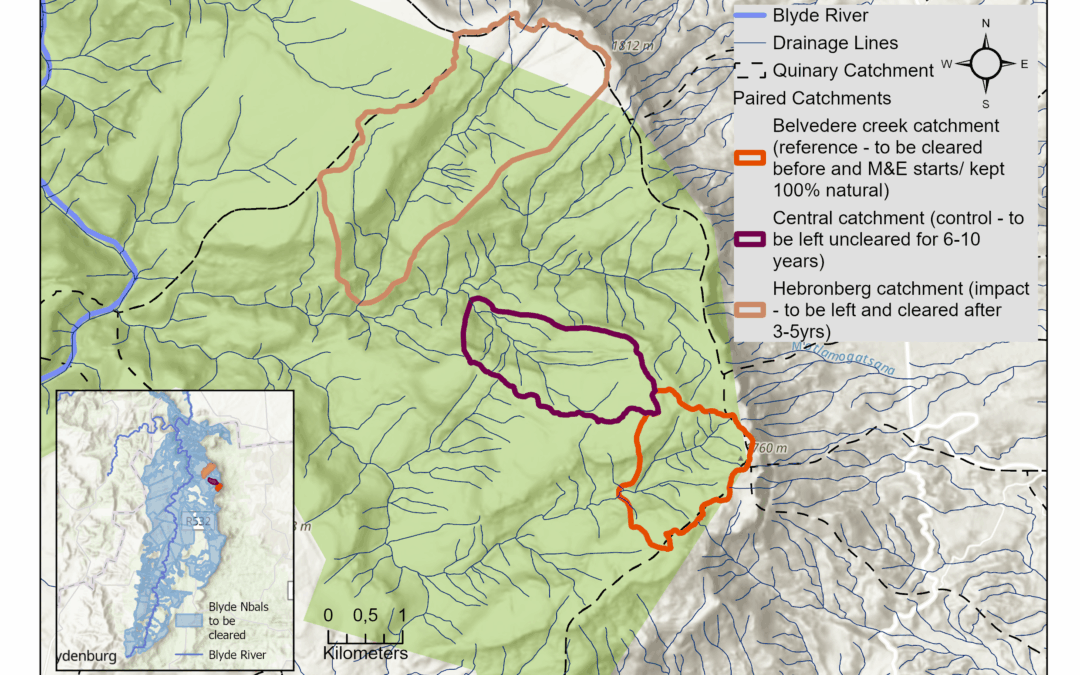
Clearing alien invasive plants to protect Lowveld water
K2C’s Paired Catchment Experiment in the Upper Blyde Catchment is helping to measure how alien invasive plant clearing affects water availability over time. Set within the Blyde River Canyon Nature Reserve, the long-term study compares invaded, cleared and rehabilitated catchments to build stronger local evidence for catchment restoration. The project supports K2C’s work to protect biodiversity, restore priority grasslands and strengthen future water security for the Lowveld.
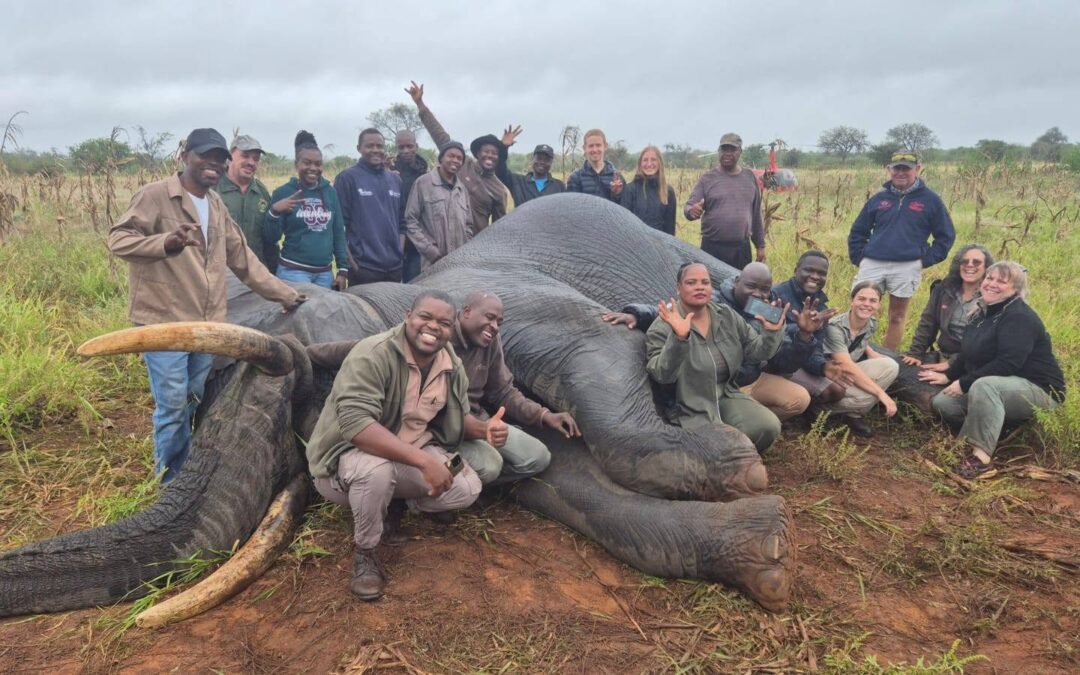
Listening, responding, adapting: Vusi Tshabalala on human-wildlife coexistence in Phalaubeni
In Phalaubeni, where communities live directly alongside the Kruger National Park, recent elephant movement into farmlands placed crops, fences, people and elephants at risk. K2C’s Vusi Tshabalala has been closely involved in supporting a coordinated response with the community, Elephants Alive and other partners. In his Hoedspruit FM interview, he reflects on the realities of human-wildlife coexistence, the importance of trust and reporting, and how practical tools such as elephant collaring can support safer shared landscapes.
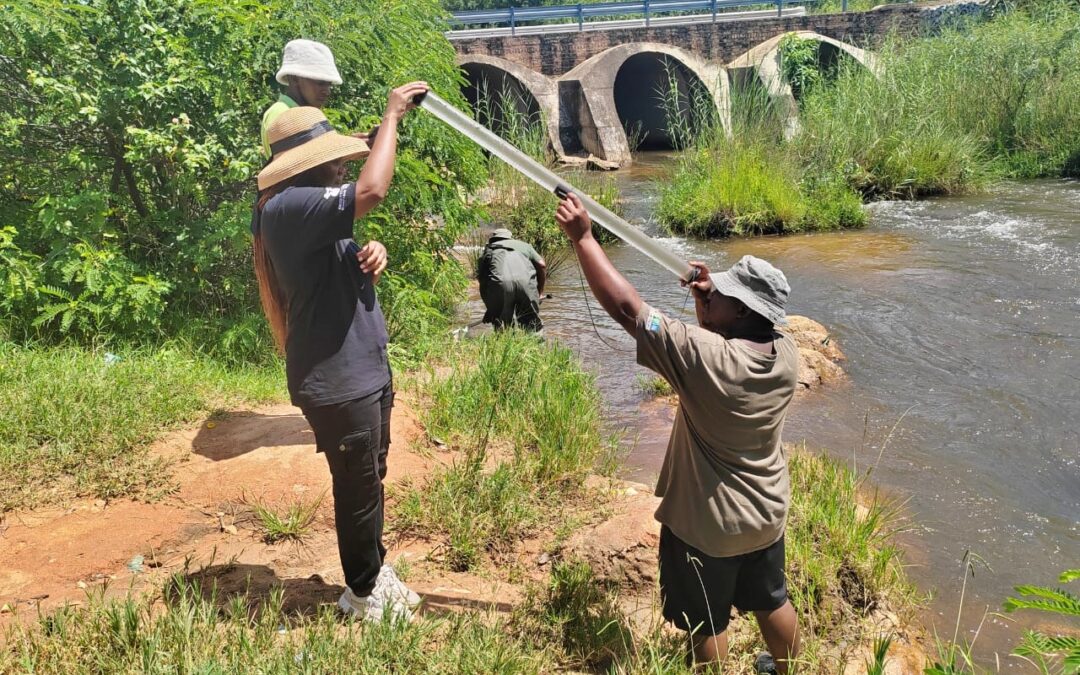
Citizen science strengthens water protection in the K2C Biosphere
Citizen science is helping K2C strengthen water protection in the Biosphere by making changes in river health more visible. Through simple monitoring tools, local teams can track water clarity, identify impacts and support evidence-based responses to threats facing important catchments.
Carbon funding drives community change in the K2C
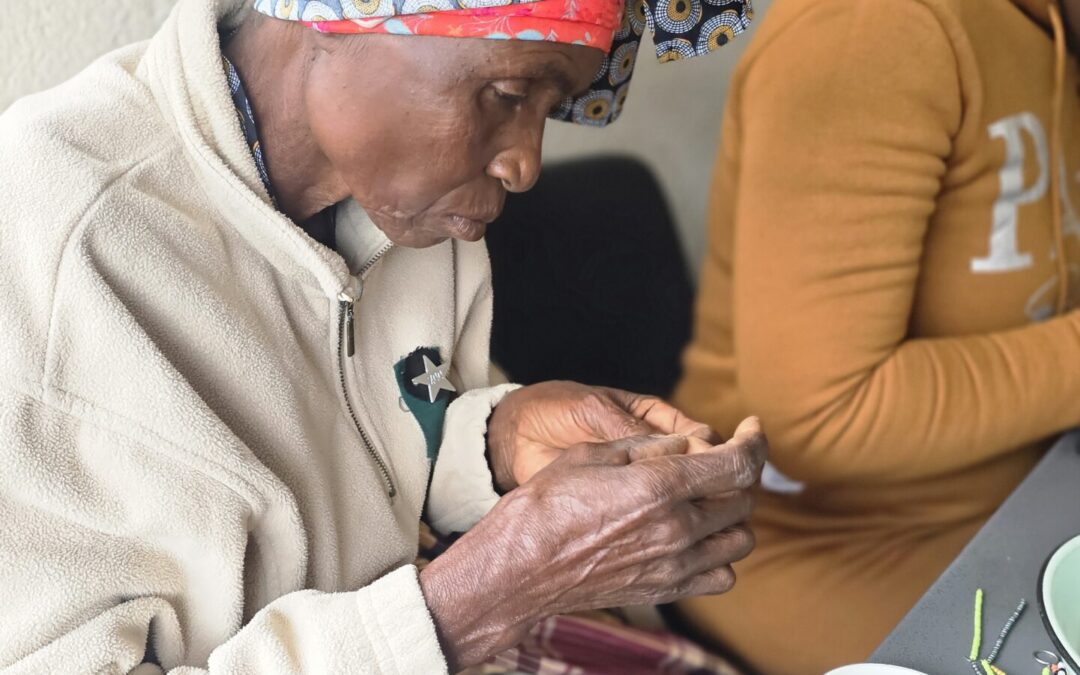
Through The TASC Foundation’s carbon mitigation projects, climate-linked funding is being reinvested into practical, community-led initiatives across the K2C cookstove catchment areas. From digital hubs and improved internet access, to cold storage and transport for small-scale farmers, to market support for local artists and crafters, these projects show how carbon funding can support both climate action and stronger local livelihoods.
When the map no longer matches the land
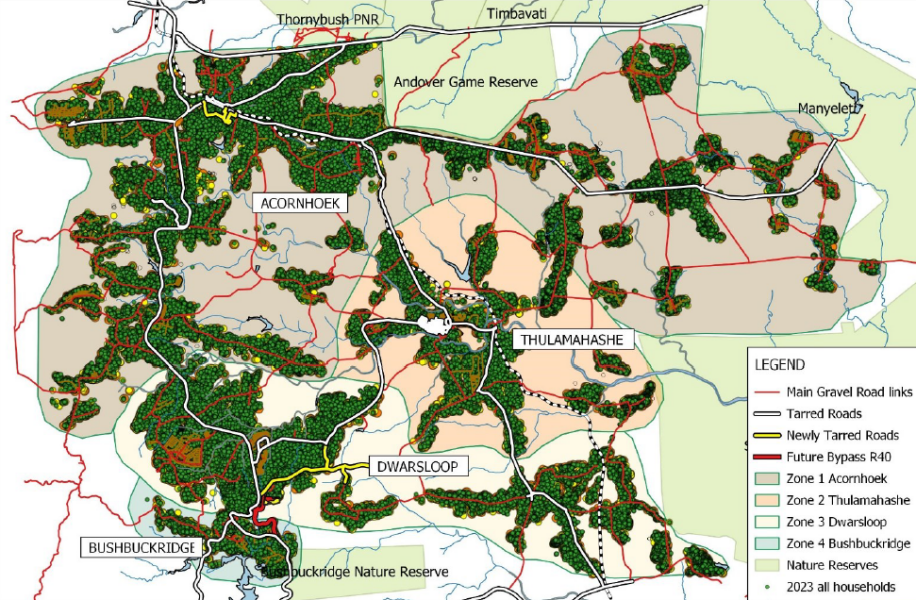
A recent policy dialogue on urbanisation in former homelands in Mpumalanga highlighted a growing reality for Bushbuckridge: the landscape is changing faster than many planning frameworks can describe. New research shows rapid population growth, expanding residential construction, complex governance challenges and increasing pressure on natural resources, including river sand and water systems. For K2C, the findings reinforce the need for place-based, transdisciplinary work that understands the Biosphere as it is: a living social-ecological system where conservation, livelihoods, land use and urbanisation are deeply connected.
